




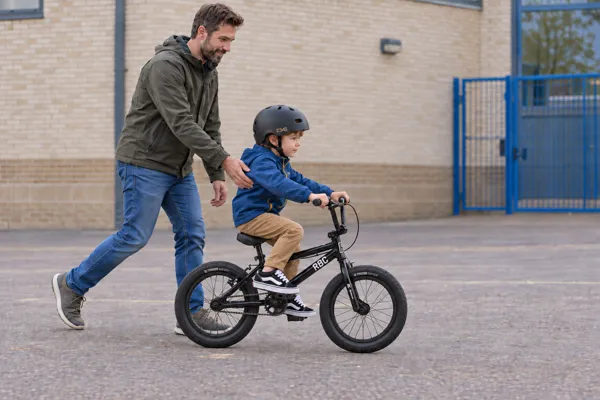
Image generated using AI.
Your child glides, turns and lifts their feet on a balance bike, then seems unsure what to do on a pedal bike. If you expected them to hop on and ride away, that can come as a surprise.
Being able to balance helps, but pedalling, setting off and using different brakes still take practice. Here’s how to work through those steps and help when the first few attempts don’t go to plan.
When should you try a pedal bike?
Watch your child on their balance bike. If they can glide with their feet up, turn and stop where they intend to, they already have skills that will help with the move to pedals. They also need to want to give it a go.
If they mostly walk with the bike between their legs, give them more time to push along and try short glides. If they ride confidently but aren’t interested in another bike, offer a go without insisting. Their age and their friends’ progress don’t have to set the timetable.
Check the bike and choose a place to practise
Find a flat, dry area away from traffic, potholes and loose gravel. Leave enough room to ride straight and stop without suddenly having to steer around people or obstacles.
The bike needs to be correctly assembled, adjusted and checked following its instructions. Make sure your child can reach the handlebars and operate the brakes. For these first attempts, set the saddle so they can put both feet on the ground while seated. You can adjust the position as their riding develops.
Before riding, put on a correctly fitted, fastened helmet. Choose closed-toe shoes and clothing that won’t catch on the pedals or drivetrain.
Still choosing a bike? Our guide to your child’s first bike explains what to measure and how to check the fit.
You can also compare our 14-inch and 16-inch BMX bikes. Start with the rider-height guidance and dimensions of the exact model: wheel size alone doesn’t tell you whether it fits.
Not sure where to start? Get in touch with your child’s height, inside-leg measurement and a little about how they’re getting on with their balance bike. We’ll help you narrow down the choice.
Help them set off and start pedalling
Practise braking first
Start beside the bike. Ask your child to walk it along and stop it using the brakes. Show them how the brakes work and check that they can use them without help.
If they’ve only stopped with their feet on a balance bike, brake levers will be new to them. Help them get familiar with the levers before they pick up speed.
Show them where to put the starting pedal
Ask your child to sit on the saddle with one foot on the ground and the other on a pedal positioned forwards and slightly above horizontal. That gives them a useful starting point for pushing down and getting moving.
Show them a few times so they know how to set themselves up for the next attempt.
Keep the first ride short
Ask them to push down on the raised pedal and find the other pedal with their second foot. If they need support, hold them gently under the arms while letting them steer.
Setting off, turning the pedals a few times and stopping is enough to begin with. Pick a visible point a few metres ahead to aim for. Extend the distance once that short ride starts to feel manageable.
Give one instruction at a time. “Look ahead” or “brake now” is easier to follow than several directions in one breath.
They keep looking down at the pedals
On a balance bike, they didn’t have to find pedals with their feet. Practise placing their feet on the pedals while you support them before trying it on the move.
During a short ride, choose a point ahead and ask them to look towards it. If they stop pedalling after a few turns, stick with short distances. Try going further once they no longer need to keep looking for the pedals.
They’re afraid to lift their feet
A balance bike let them put their feet down whenever they wanted. Moving both feet onto pedals can feel less reassuring. First check that they can reach the ground from the saddle and get off the bike without help.
If the bike fits, practise getting on, placing their feet on the pedals and putting them back on the ground while you support them. Try setting off after that.
Explain how you’ll help and keep each attempt short. If they don’t want to ride yet, come back to it another time.
Do you need stabilisers after a balance bike?
If your child can already balance, you don’t need to fit stabilisers automatically. Work out what’s difficult first. It might be setting up the starting pedal, finding the second pedal or feeling unsure on a different bike.
Stabilisers provide support, but they change how the bike handles. They don’t replace learning to set off, pedal and brake. Start by practising the part your child is finding tricky.
What if they still prefer their balance bike?
You can take the balance bike on your usual outings and practise pedalling separately. Every trip doesn’t have to become a lesson.
Agree how you’ll help before each attempt. If you’re supporting your child, tell them when you’re reducing that support. Don’t say you’re still holding them after you’ve let go.
Watch for tiredness and frustration. A few attempts ending with a successful start can be more useful than a long session that leaves you both fed up.
How long does the move to pedals take?
Some children put the new skills together quickly; others need more practice. There’s no set number of days to promise.
Look for the smaller steps: setting a pedal without help, a first start, a few turns without looking at their feet, or stopping where they meant to. They all count.
Once your child can ride without support, keep practising setting off, braking and turning. They need all three to build control of the bike.
Questions about moving from a balance bike to pedals
Should a child be able to pedal straight after using a balance bike?
No. A balance bike gives them practice at balancing and steering, but setting off and pedalling are new skills. They also need to learn the new bike’s brakes and put those actions together while riding.
My child is confident on a balance bike but can’t pedal. What can I do?
Start with one foot on the ground and the other on a pedal ready to push down. Help them set off and find the second pedal. A few turns and a stop are enough at first, so they can focus on one difficulty at a time.
Are stabilisers necessary after a balance bike?
No. If your child can balance, check what’s holding them back on the new bike. They may need help with setting off or placing their feet on the pedals. Stabilisers provide support, but they don’t teach those steps for them.
What if my child is scared of their pedal bike?
Check the fit and make sure they can put their feet down easily. Practise getting on and off and using the brakes. Explain how you’ll support them, and leave riding for another time if they’re not ready to try.
Can they keep using their balance bike while learning to pedal?
Yes, as long as it still fits and they use it in line with the manufacturer’s guidance. Keep it for outings and practise on the pedal bike separately.
How long should it take to switch from a balance bike to pedals?
There’s no fixed timetable. Notice each new step, from setting off without help to pedalling and stopping, instead of counting the days.


