






Buying your child’s first stunt scooter: 10 mistakes to avoid
Your child has spotted a scooter they love. Before you pick a colour and add it to the basket, check that it suits their height, the way they’ll ride and what they can comfortably handle. Getting those things right will give them a better starting point for learning.
1. Choosing a leisure scooter for skatepark tricks
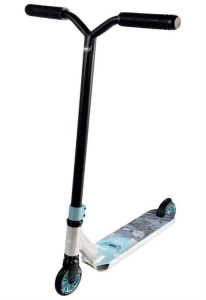
A scooter for the school run isn’t necessarily built for jumps and landings. Look for a model the manufacturer specifically describes as suitable for stunt riding. A rigid frame and fixed-height bar are typical features, but appearance alone doesn’t prove what a scooter is designed to do.
For a first setup, a correctly sized complete stunt scooter keeps the choice simpler than assembling individual parts.
Not sure which type you need? Read our comparison of stunt scooters and everyday kick scooters.
2. Choosing by age alone
Two children of the same age can need different sizes. Start with your child’s height and the sizing advice for the particular model. Check how the manufacturer measures its dimensions: bar height, ride height above the deck and overall height from the ground are different measurements.
Your child should be able to stand comfortably and steer without stretching or crouching excessively. Check deck width and usable standing space too. There isn’t one deck-to-shoe-size formula that works for every rider.
3. Letting the colour decide everything
Looks matter — your child should like their scooter. But compare the specifications before choosing between two designs.
- Size: check the complete scooter’s height, bar width and deck dimensions.
- Weight: look for a setup your child can comfortably control. A lower weight doesn’t automatically mean a scooter is only for experienced riders.
- Wheels: compare diameter and width, and check which sizes the fork and deck accept if you plan to change them later.
- Construction: consider the whole model and its intended use. A material name or T-shaped versus Y-shaped bar won’t tell you everything about strength or suitability.
If your child is just starting, focus on fit and a manageable complete rather than chasing one headline specification.
4. Comparing the price without checking what’s included
A discount can be useful. A scooter that doesn’t suit its rider is poor value at any price.
Compare the intended use, dimensions, components and availability of replacement parts. Look for clear manufacturer information and assembly instructions. Allow room in the budget for protective equipment as well as the scooter itself.
5. Leaving the helmet and pads until later
Falls can happen while learning the basics, so have protection ready for the first session. Choose a correctly fitted helmet whose manufacturer confirms it is suitable for the intended activity, and check its certification. The label “bike” or “skate” alone isn’t enough to make that decision.
Add suitable knee and elbow pads, and check their fit before riding.
6. Buying a scooter to grow into
An oversized setup can be awkward to steer, lift and control now. Choose for your child’s current size and riding rather than expecting them to manage a much larger scooter until they grow.
Some parts can be replaced as their needs change, but compatibility matters. A fixed-height bar isn’t adjustable like a leisure scooter’s handlebar. Don’t assume it can simply be cut down or swapped: check the manufacturer’s instructions and warranty terms before modifying it.
7. Taking “pro” to mean suitable for anything
Product names can sound impressive. Check the manufacturer’s stated use, rider limits and instructions instead of relying on the word “pro”. A stunt scooter still has limits, and the right choice depends on the rider and the way they use it.
Tell us whether your child is learning at the skatepark or already has a particular style of riding. That’s more useful than choosing the most advanced-looking model.
8. Forgetting about checks and maintenance
Wheels, grips and griptape wear with use. Connections also need checking, with adjustments made according to the model’s instructions. “Stunt scooter” doesn’t mean maintenance-free or indestructible.
Check for looseness, damage and worn parts before riding. Stop if something is loose, cracked or bent, and find the cause before the next session. Our practice and maintenance guide explains what to look at.
9. Leaving your child out of the choice
Ask what they enjoy riding and what they like about the scooter they’ve picked. If they already ride, find out what feels uncomfortable or gets in the way on their current setup.
You can agree on a shortlist that fits both the rider and the budget, then let them choose the design.
10. Reading reviews without checking who they’re for
A review from a taller street rider may say little about a small child’s first skatepark scooter. Look for comments about fit, handling, maintenance and replacement parts from people using the same model in a similar way.
Check the version and date too. Models can change between collections, even when their names look almost identical.
Before you choose
Check the intended use, size and rider limits, then make sure your child can comfortably handle the scooter. Include protection in the budget and find out what checks it needs before the first ride.
If you’re choosing between models, get in touch with your child’s height, riding experience and budget. We’ll help you narrow down the options.


